HistoryKey West International Airport
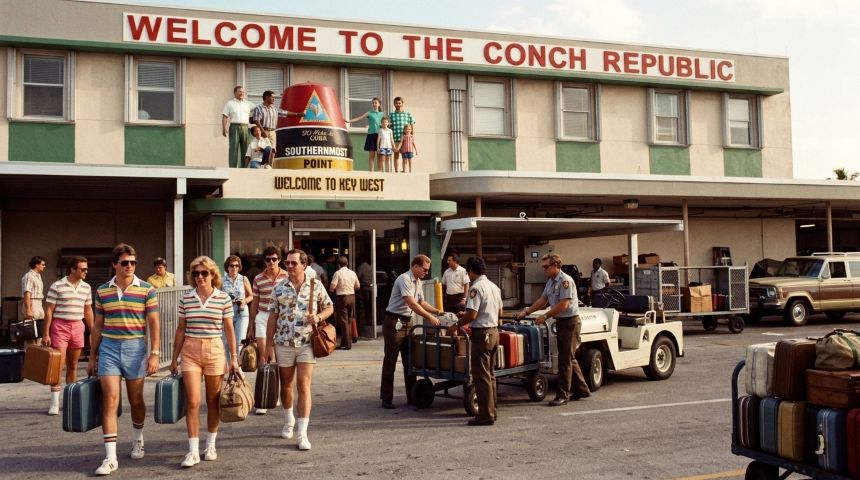
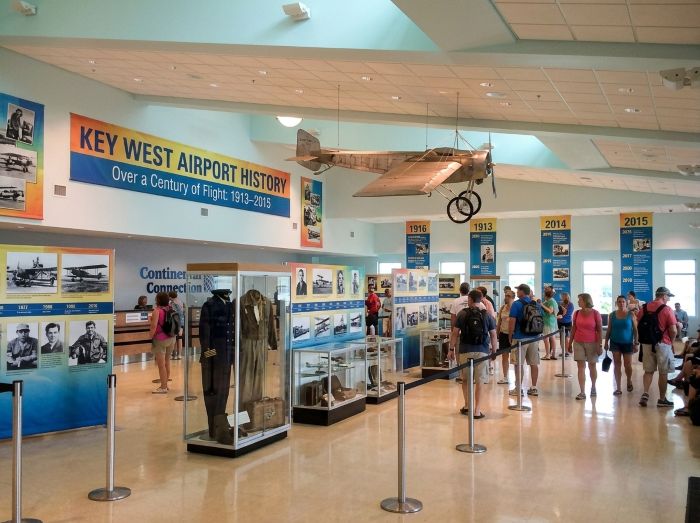
Located at the southernmost point of the continental United States, Key West International Airport history reflects more than a century of aviation milestones. What began as a grass-and-coral airstrip for early seaplanes and airmail pioneers has grown into a high-capacity commercial terminal serving over one million travelers annually. Understanding the History of EYW reveals how commercial flight transformed an isolated island city into an accessible global destination.
Subscribe on your favorite platform
Ground transportation
Car rental
Taxi
RideShare
RSS
Advertisement
End Advertiement
Early Key West Aviation History
(1913–1926)
The earliest chapter of Key West aviation history started over water rather than on a paved runway.
- First Flight to Cuba (May 19, 1913): Cuban aviator Agustin Parla launched a bi-wing Curtiss hydroplane from Key West without a compass, flying across the Florida Straits to Mariel, Cuba. Carrying the Cuban flag once held by Jose Marti, Parla landed on the open water and was rescued by local sailors. His achievement earned him induction into the Smithsonian Institution’s “Early Birds” and is commemorated at the San Carlos Institute in Key West.
- Military Seaplane Operations (1918): In May 1918, a twin-engine U.S. Navy seaplane completed a historic flight from Key West to Cuba, establishing the island’s strategic value for over-water military aviation.
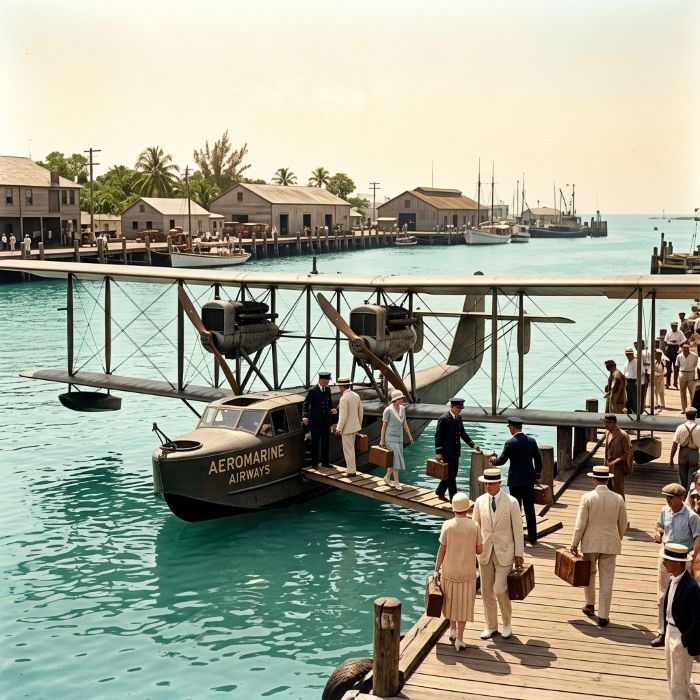
- First Commercial Service: Aeromarine Airways became the first commercial carrier to operate out of Key West in the early 1920s, transporting passengers between Florida and Havana before Pan American Airways arrived.
Advertisement
End Advertiement
Meacham Field and the Pan Am Key West First Flight (1927–1945)
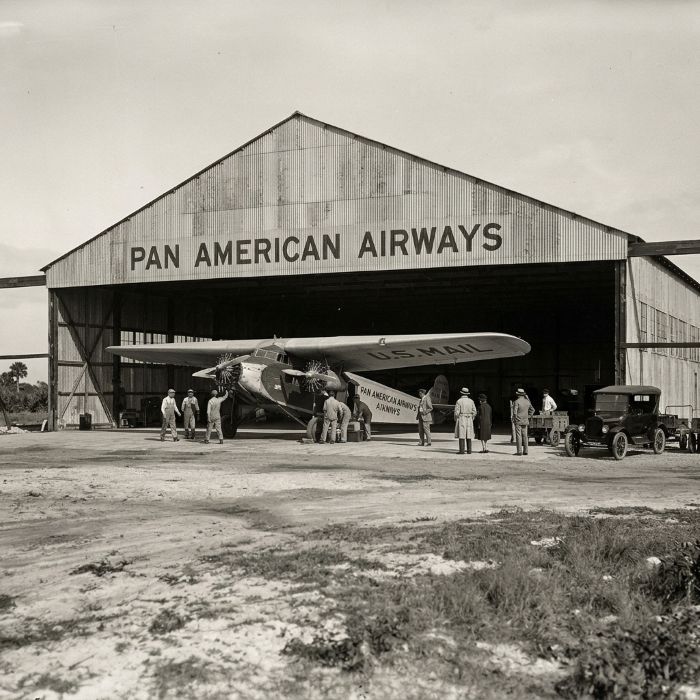
In 1927, a small landing strip on the southeast corner of the island became the birthplace of U.S. international scheduled air service. Originally named Meacham Field Key West, this coral-rock airfield served as the launchpad for Pan American Airways Meacham Field operations.
Book Flights
- First International Airmail (October 1927): Pan American Airways launched its inaugural U.S. international airmail contract from Meacham Field to Havana, Cuba, establishing Key West as the primary air gateway to the Caribbean.
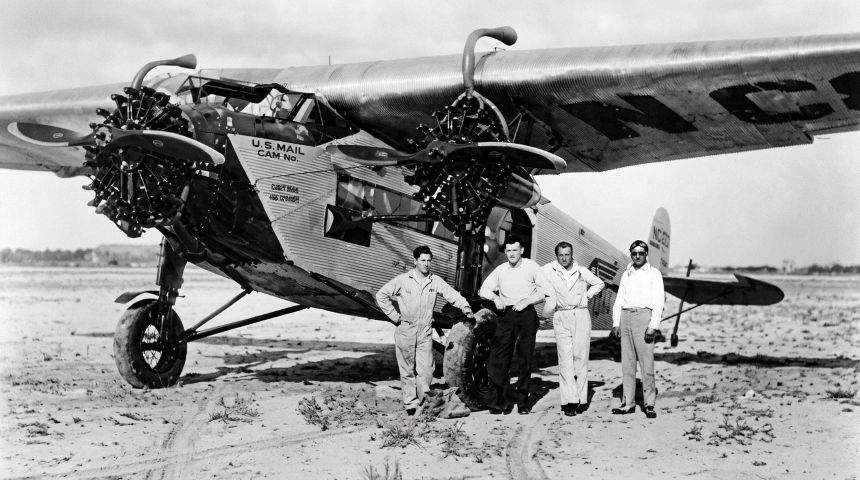
- Pan Am Key West First Flight (January 1928): Following the airmail launch, the Pan Am Key West first flight carrying scheduled international passengers departed Meacham Field for Havana in January 1928 aboard a Fokker F-7 trimotor.
- Hurricane Relief & Relocations: Pan American shifted its primary base to Miami in 1928–1934 to accommodate larger flying boats, but temporarily restored emergency airmail and passenger flights to Key West after the devastating 1935 Labor Day Hurricane destroyed the Overseas Railroad.
- World War II Military Control: Following the attack on Pearl Harbor in December 1941, the U.S. Army took control of Meacham Field. Later in World War II, the U.S. Navy operated the airfield as an auxiliary runway supporting Naval Air Station Boca Chica and the Trumbo Point Seaplane Base.
old Key West airport
Ground transportation
Car rental
Taxi
RideShare
RSS
Advertisement
End Advertiement
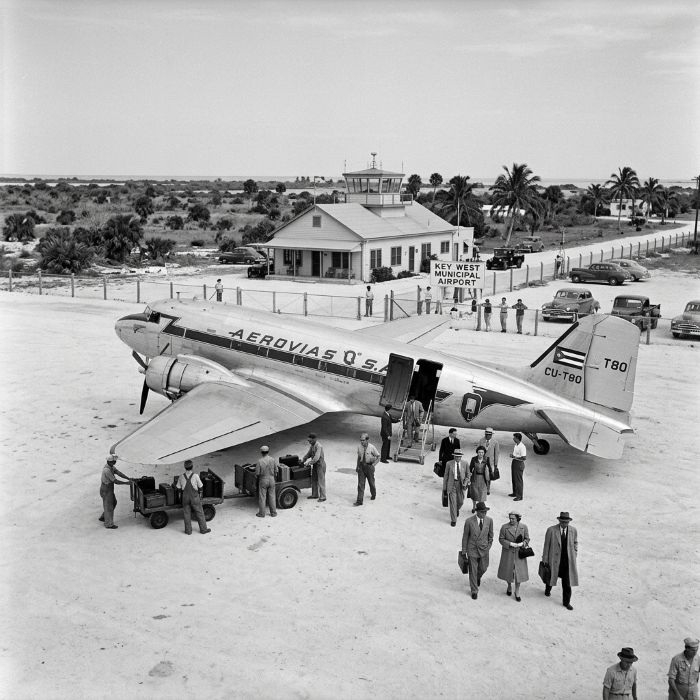
From Key West Municipal Airport to EYW (1946–1999)
Once World War II ended, federal authorities returned the old Key West airport to civilian control, ushering in the era of Key West Municipal Airport.
Book Flights
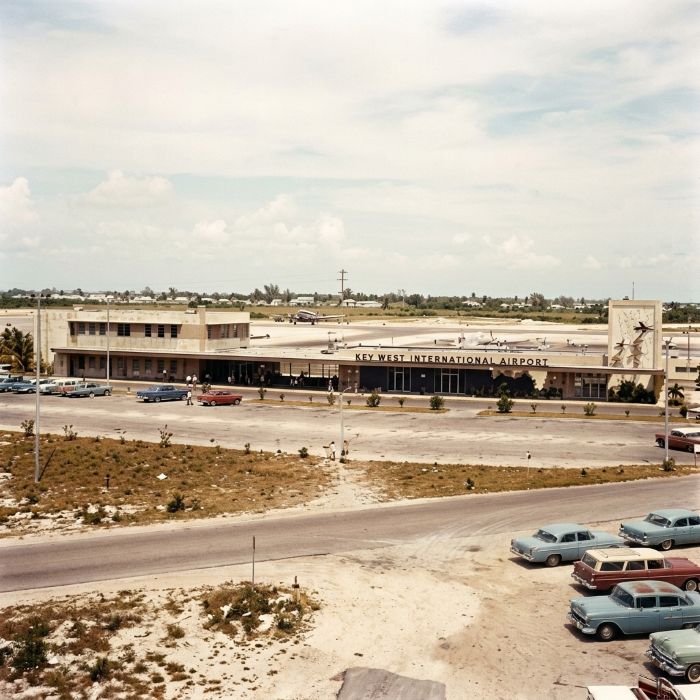
- County Transfer & Renaming (January 1953): In January 1953, the City of Key West transferred clear title of Meacham Field to Monroe County. County commissioners officially renamed the facility Key West International Airport (IATA: EYW). That same month, 63 private aircraft landed at EYW during the 10th annual “Snowbirds Flight” returning from Havana.
- Post-War Commercial Carriers: Throughout the 1940s and 1950s, National Airlines operated scheduled flights connecting Key West and Miami, while Cuban carrier Aerovias Q maintained international routes between Key West and Havana until diplomatic relations shifted in the early 1960s.
- Regional & Mainline Growth: During the 1970s, 1980s, and 1990s, carriers including Air Florida, Eastern Air Lines, Piedmont Airlines, USAir, and Comair connected EYW to major Florida hubs.
Advertisement
End Advertiement
Modern Key West Airport Expansion History (2006–2026)
Constrained by a single 5,076-foot runway (Runway 09/27) and surrounding salt ponds, Key West airport expansion history has focused on maximizing passenger capacity and modernizing terminal infrastructure within a compact 334-acre footprint.
Book Flights
- 2006–2009 Terminal & Parking Expansion: Starting in 2006 and opening in 2009, Monroe County completed a major renovation that more than doubled the airport’s terminal footprint and added a ground-level parking facility for 300 vehicles beneath the elevated ticketing hall.
- 2018 Runway Safety Enhancements: In 2018, crews worked overnight to extend the runway pavement by 227 feet, widen runway shoulders, and upgrade Engineered Materials Arresting Systems (EMAS) to improve safety margins for commercial jets.
- Regional Route Evolution: Over the past two decades, mainline carriers including American Airlines, Delta Air Lines, United Airlines, JetBlue, and Allegiant expanded nonstop service to major U.S. hubs, alongside regional operators like Silver Airways (which launched Savannah–Key West service in 2021 before ceasing operations in June 2025).
- Concourse A & Baggage Claim Rebuild (2022–2026): To replace outdoor tarmac boarding and alleviate terminal crowding, EYW broke ground in November 2022 on a nearly $99 million terminal modernization program. The new 48,000-square-foot, two-story Concourse A opened in spring 2025 with eight gates, enclosed glass passenger boarding bridges, electrochromic smart glass, and expanded dining. In April 2026, EYW opened the first of two new baggage claim carousels in the reconfigured ground-level arrivals hall alongside an expanded TSA security checkpoint—helping push EYW past the 1 million annual passenger mark by July 2026, the earliest milestone in EYW airport history.
Key West airport expansion history
Ground transportation
Car rental
Taxi
RideShare
RSS
Advertisement
End Advertiement
Key Milestones in the History of EYW
| Year | Historical Milestone |
|---|---|
| 1913 | Agustin Parla completes the first flight from Key West to Cuba in a bi-wing hydroplane. |
| 1927 | Pan American Airways launches the first U.S. international airmail service from Meacham Field to Havana. |
| 1928 | Pan Am operates its first scheduled international passenger flight from Key West to Havana. |
| 1941–1945 | U.S. Army and U.S. Navy operate Meacham Field during World War II. |
| 1953 | Monroe County acquires Meacham Field and renames it Key West International Airport. |
| 2009 | New elevated ticketing terminal and 300-space ground-level parking facility open. |
| 2025 | Second-level Concourse A opens with enclosed glass jet bridges, ending tarmac boarding. |
| 2026 | Reconfigured ground-floor baggage claim opens as EYW reaches 1 million passengers in record time. |
Advertisement
End Advertiement
The Future of Key West International Airport
Today, Key West International Airport stands as a vital economic engine for the Florida Keys. From the wooden biplanes of 1913 and the historic Pan Am trimotors at Meacham Field to today’s climate-controlled concourses, the ongoing story of EYW continues to bridge the southernmost island city with travelers around the globe.
Key West Airport History Notes
The evolution of Key West International Airport mirrors the dynamic growth and development of the island itself. From its humble beginnings as a Naval Air Station to its current status as a modern gateway to paradise, the airport has played a crucial role in connecting Key West to the world. As the island continues to thrive as a popular tourist destination and a unique community, the airport stands ready to adapt and expand, ensuring that Key West Airport History remains accessible to all who seek its sun-drenched shores and vibrant culture.
Advertisement
End Advertiement